Plates for boilers and pressure vessels
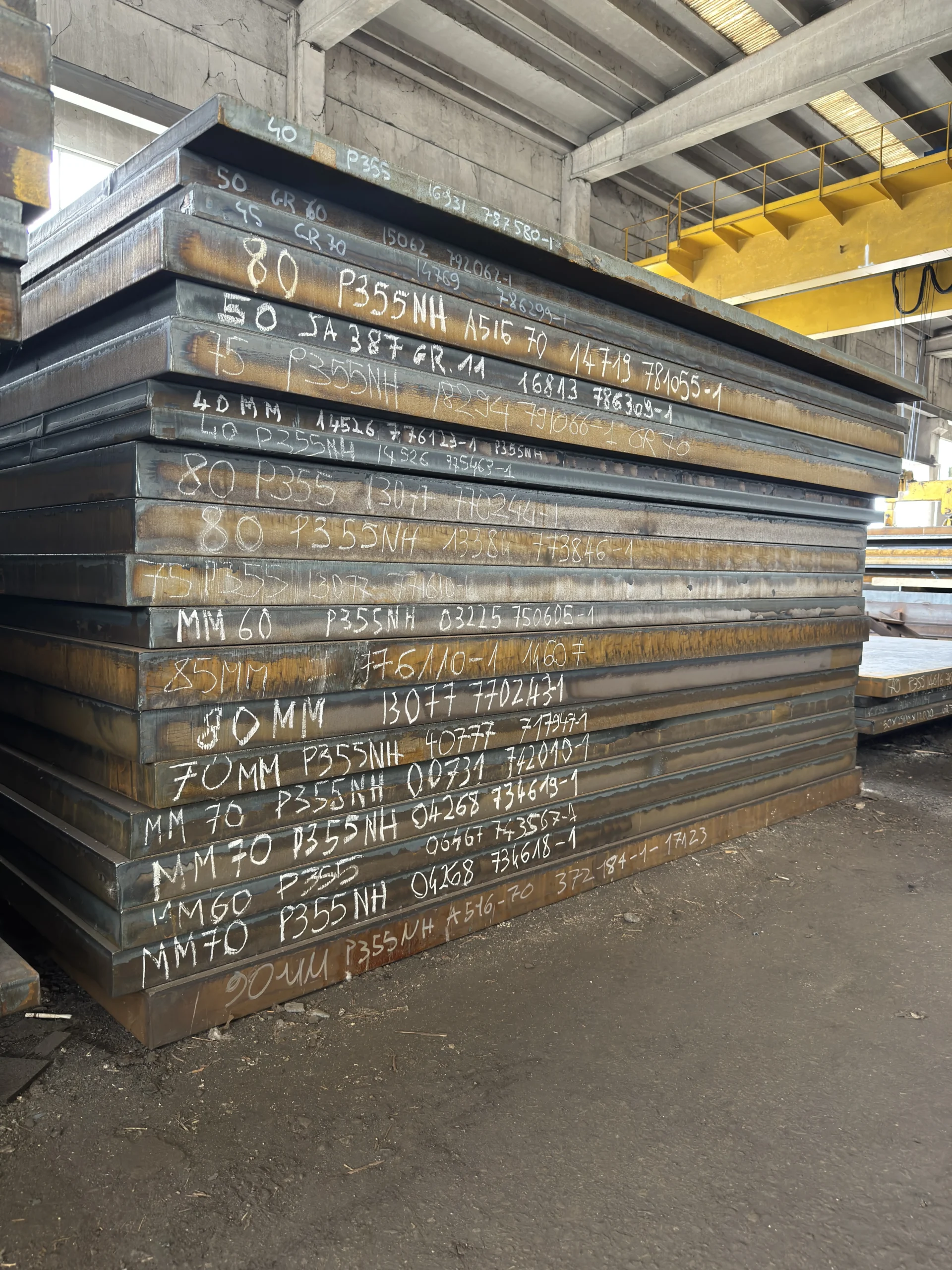
Rolla, Traverso & Storace supplies steels for the boiler and pressure vessel industry: European-made sheets in compliance with the American ASME standards and European standards EN 10028, available in stock in the warehouses in Genoa and Rivalta Scrivia in thicknesses from 5 to 130 mm.
The range covers high-temperature applications, low-temperature applications, low-alloy chromium-molybdenum steels, and materials subjected to HIC tests for service in acidic environments. Each delivery is accompanied by the 3.1 test certificate according to EN 10204.
Which boiler steel to choose
The choice of quality depends on three variables: the operating temperature of the device, the pressure at which it operates, and the nature of the fluid contained. To these are added the destination market, which determines whether the regulatory reference will be European or American.
Applications at elevated temperatures: the GH degrees according to EN 10028-2
The EN 10028-2 standard applies to unalloyed and alloyed steels for high-temperature applications. The P265GH, P295GH, and P355GH grades are the most common for boilers, tanks, and pressure equipment for general use. P265GH is the reference for standard equipment due to its excellent weldability; P295GH and P355GH are used when higher stress and tensile strength are required.
Low-temperature applications: N degrees according to EN 10028-3
The EN 10028-3 standard concerns fine-grained weldable steels in the normalized state. The grades P275NH, P355NH and P460NH are indicated for vessels operating at room temperature or below. The variants NL1 and NL2 ensure resilience to negative temperatures, with NL2 being used where the requirements for toughness at low temperatures are more stringent.
International market: ASME standards
For contracts intended for the international market or built according to the ASME code, the reference is ASME SA 516 in grades 60, 65 and 70, the reference for welded tanks in service at moderate and low temperatures. ASME SA 537 cl.1 is used where higher mechanical characteristics are required.
High temperatures: low-alloy steels with chromium-molybdenum
For high-temperature applications typical of the petrochemical industry and refining processes, ASME SA 387 gr. 11 cl.2 and gr. 22 cl.2 chromium-molybdenum steels are used. Molybdenum improves the resistance to viscous flow, that is, the slow deformation of the material under constant load at high temperatures.
Acidic environments: materials with HIC tests
When the fluid contained is acidic and includes hydrogen sulfide, a frequent condition in oil & gas plants, the material must resist embrittlement by hydrogen. In these cases, ASME SA 516 sheets gr. 60/65/70 are supplied, subjected to HIC tests according to NACE, in thicknesses from 8 to 100 mm.
Qualities available in stock
Type
Technical characteristics
Thickness
Steel for boiler and pressure vessels according to STD ASME
ASME SA 516 gr. 60
ASME SA 516 gr. 70
ASME SA 516 gr. 65
ASME SA 537 cl.1
5-50mm
5-130mm
5-130mm
5-130 mm
Steel for boilers and pressure vessels according to EN 10028-3
P275 NL1/NH/NL2
P355 NH/NL1/NL2
P460 NH/NL2
5-130 mm
5-130 mm
8-30 mm
Steel for boilers and pressure vessels according to EN 10028-2
P265 GH
P295 GH
P355 GH
5-130 mm
6-130 mm
6-130 mm
Low-alloy steels for medium and high temperatures
ASME SA 387 gr. 11 cl.2
ASME SA 387 gr. 22 cl.2
8-60 mm
8-40 mm
Steel for boiler and pressure vessels with HIC test STD ASME
ASME SA 516 gr. 60/65/70
8-100 mm
Dicrest 5 sheets
SA 516 gr. 60/65/70
on request
*The thicknesses and quality indicated are those normally available. For sizes, grades, or quantities other than those in stock, we handle dedicated orders at our partner steel mills.
Qualities available in stock
Steel for boiler and pressure vessels according to STD ASME
Technical characteristics
ASME SA 516 gr. 60
ASME SA 516 gr. 70
ASME SA 516 gr. 65
ASME SA 537 cl.1
Thickness
5-50mm
5-130mm
5-130mm
5-130 mm
Steel for boilers and pressure vessels according to EN 10028-3
Technical characteristics
P275 NL1/NH/NL2
P355 NH/NL1/NL2
P460 NH/NL2
Thickness
5-130 mm
5-130 mm
8-30 mm
Steel for boilers and pressure vessels according to EN 10028-2
Technical characteristics
P265 GH
P295 GH
P355 GH
Thickness
5-130 mm
6-130 mm
6-130 mm
Low-alloy steels for medium and high temperatures
Technical characteristics
ASME SA 387 gr. 11 cl.2
ASME SA 387 gr. 22 cl.2
Thickness
5-130 mm
6-130 mm
6-130 mm
Steel for boiler and pressure vessels with HIC test STD ASME
Technical characteristics
ASME SA 516 gr. 60/65/70
Thickness
8-100 mm
Dicrest 5 sheets
Technical characteristics
SA 516 gr. 60/65/70
Thickness
on request
*The thicknesses and quality indicated are those normally available. For sizes, grades, or quantities other than those in stock, we handle dedicated orders at our partner steel mills.
Steel for boiler and pressure vessels according to ASME standards
The steels supplied in accordance with the ASME (American Society of Mechanical Engineers) standard are the reference for contracts destined for the international market and for equipment manufactured in accordance with the ASME Section VIII code.
ASME SA 516 gr. 60
Thicknesses from 5 to 50 mm. Carbon steel for pressure vessels in service at moderate and low temperatures. It is the grade with the lowest mechanical characteristics of the SA 516 family and offers in return the best weldability and formability. It is used where sizing does not require high resistances and where it is desired to keep the thickness of the welds to a minimum.
ASME SA 516 gr. 65
Thicknesses from 5 to 130 mm. Intermediate grade in the family, with tensile strength exceeding grade 60 at the same level of weldability. Often chosen when grade 60 does not offer sufficient margin but you do not want to move to grade 70.
ASME SA 516 gr. 70
Thicknesses from 5 to 130 mm. The most common grade in the family and the international reference for welded pressure tanks and containers. It offers the best ratio between mechanical strength, weldability and availability on the market. Also available in a normalized version and with low-temperature resilience tests when required by the specifications.
ASME SA 537 cl. 1
Thicknesses from 5 to 130 mm. Carbon-manganese-silicon steel supplied in a normalized state. Compared to SA 516, it offers superior mechanical characteristics and better low-temperature toughness, which in many cases allows reducing the design thickness while maintaining the same performance.
Steel for boilers and pressure vessels according to EN 10028-2
The EN 10028-2 standard concerns unalloyed and alloyed steels for high-temperature applications. It is the European reference for boilers, tanks and pressure equipment for general use. The abbreviation GH indicates high-temperature use; the number corresponds to the minimum stress relief load at the thinnest thicknesses.
P265 GH
Thicknesses from 5 to 130 mm. The most common grade in the standard boiler and tank standard. The low-carbon composition ensures excellent weldability, with simple preheating procedures even at medium thicknesses. It is the default choice for equipment with moderate pressure and temperature requirements.
P295 GH
Thicknesses from 6 to 130 mm. Intermediate grade, indicated when the project requires fatigue loads higher than P265GH while maintaining the same thermal operating range.
P355 GH
Thicknesses from 6 to 130 mm. The grade with the highest mechanical characteristics of the GH family. It is chosen when resistance to tensile and shear forces is required at temperatures above 50°C, accepting in return greater attention during welding procedures.
Steel for boilers and pressure vessels according to EN 10028-3
The EN 10028-3 standard concerns fine-grained weldable steels in the normalized state, intended for equipment operating at or below room temperature. The final suffixes indicate the minimum temperature of the resilience tests: NH for applications up to approximately -20 °C, NL1 up to approximately -40 °C, NL2 up to approximately -50 °C. The fine-grained structure is what guarantees toughness in this temperature range.
P275 NH / NL1 / NL2
Thicknesses from 5 to 130 mm. The basic grade of the standard, with a low stress load and excellent weldability. Used for containers in service at room or low temperatures where high resistances are not required.
P355 NH / NL1 / NL2
Thicknesses from 5 to 130 mm. The most requested grade of the family, which combines good mechanical strength and high toughness at low temperatures. It is the reference quality for medium-range cryogenic tanks and for equipment installed in harsh climates or in service with refrigerated fluids.
P460 NH / NL2
Thicknesses from 8 to 30 mm. The high-strength grade of the standard is available in thinner thicknesses. It is used where the design requires reducing weight and thickness while maintaining stringent requirements for toughness at low temperatures.
Low-alloy steels for medium and high temperatures
Chromium-molybdenum steels are intended for high-temperature use, typical of the petrochemical industry and refining processes. Molybdenum improves resistance to viscous flow, that is, slow deformation under constant load at high temperatures, while chromium increases resistance to oxidation and hydrogen attack.
ASME SA 387 gr. 11 cl. 2
Thicknesses from 8 to 60 mm. Steel 1.25% chrome - 0.5% molybdenum, supplied normalized and found. Used in heat exchangers, reactors and process pipes in service at medium-high temperatures.
ASME SA 387 gr. 22 cl. 2
Thicknesses from 8 to 40 mm. 2.25% chromium-1% molybdenum steel, with alloy contents exceeding 11 g/m². It is chosen for the most severe operating conditions in terms of temperature and hydrogen presence, typical of refining and hydrotreating plants.
Steel with HIC tests for acidic environments
ASME SA 516 gr. 60/65/70 with HIC test
Thicknesses from 8 to 100 mm. Sheets subjected to hydrogen embrittlement resistance testing according to NACE standards, necessary when the container contains acidic fluids containing hydrogen sulfide. The verification concerns the formation of hydrogen-induced cracks in the material thickness. A recurring condition in oil & gas plants and in the treatment of acidic natural gas.
Dicrest 5 sheets
The Dicrest 5 sheets in SA 516 gr. 60/65/70 variants are appreciated for their strength and durability in heavy-duty operating conditions. They are used where standard material does not offer sufficient margin against the anticipated stresses.
Tests and inspections on boiler plates
All tests are performed by Accredia-approved laboratories. Upon specific request from the customer, any additional testing can be arranged.
Ultrasonic inspection
Hardness test HB
Supplementary mechanical tests
HIC test according to NACE or other standards
Simulated heat treatments (PWHT)
Sandblasting and primerization
Inspections in the presence of third-party bodies
Frequently asked questions about boiler steels
What is the difference between P265GH and P355GH?
Both fall under EN 10028-2 for high-temperature applications. P265GH has lower fatigue load but excellent weldability, and is the most common grade for standard boilers and tanks. P355GH is chosen when the design requires superior mechanical characteristics, at the same temperature conditions.
What do the abbreviations NH, NL1 and NL2 mean?
They identify EN 10028-3 normalized fine-grained steels based on the minimum test temperature for resilience. NH is the version for room temperature, NL1 and NL2 guarantee toughness at progressively lower temperatures.
When should the HIC test be performed?
When the container contains acidic fluids with hydrogen sulfide, a condition typical of oil & gas plants. The test verifies the material's resistance to hydrogen embrittlement according to NACE standards.

Request a quote for boiler tubes
Indicates quality, thickness, dimensions and quantity: we verify the availability in stock and confirm the timing and documentation.